Uman
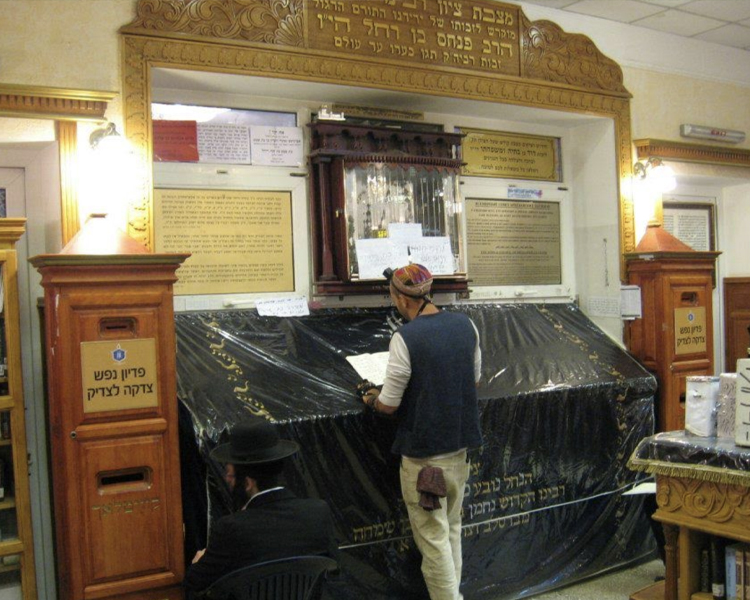 The Tomb of Tzadik Nachman in Uman
The grave of Tzadik Nachman in Uman is a pilgrimage site for Hasidim from all over the world. Every year during the celebration of the Jewish New Year, Rosh Hashanah, Uman becomes the religious capital of Hasidism. The city streets are packed, and finding available lodging is practically impossible, so if you want to visit Rabbi Nachman’s grave and learn more about him, it’s best to choose any other day for your visit to Uman. However, if you want to be here specifically for Rosh Hashanah, you’ll need to plan your visit in advance and book a place to stay.
Who Is Rabbi Nachman
Hasidism is a branch of Judaism. This movement originated in Ukraine. One of the most revered Hasidic leaders—the tzadikim—is Nachman, the great-grandson of the founder of Hasidism. He was born in Bratslav and became a rabbi—the spiritual leader of the local Jewish community—at a very young age. His teachings spread far beyond Bratslav and earned him great respect and thousands of followers.
In 1810, he moved to Uman. However, he did not live there long—his entire family, including the Rebbe himself, contracted tuberculosis, which was incurable at the time. Nahman died that same year, 1810.
Tzadik Nachman’s final sermon was delivered on the occasion of the New Year according to the Jewish calendar. In it, he instructed his followers to bury him in Uman and to visit his grave every year. A month later, the tzadik passed away, yet his teachings and final wishes spread throughout the world.
Rabbi Nachman promised that he would surely save the soul of anyone who came to his grave, gave alms, and recited ten chapters of the Psalms: “I will grab you by the sidelocks and pull you out of hell, no matter what, and no matter what evil deeds you may have done.”
The Tomb of Tzadik Nachman
The history of Rabbi Nachman’s grave in Uman is rich and quite complex. It became a place of pilgrimage for many followers of his teachings as early as the mid-1920s. However, after the Bolshevik Revolution, it became increasingly difficult for pilgrims to travel to Uman.
Tzadik Nachman’s grave was destroyed during World War II, and in the postwar years, the site of the old Jewish cemetery was built over with residential buildings. However, in the late 1980s, pilgrimages to the grave resumed and began to gain popularity after Ukraine gained independence. The Bratslav Hasidim acquired the land where the grave was located and built a burial complex on the site.
In 1993, two Israeli Hasidim attempted to remove Nachman’s remains for reburial but were stopped by the Ukrainian police. The following year, the President of Ukraine designated the Tzadik’s burial site as a Historical and Cultural Center. Although proposals to reburial Nachman’s remains in Jerusalem were made several times, the Hasidim rejected the idea because it contradicted their teacher’s wishes.
The Uman Historical and Cultural Center Charitable Foundation is dedicated to protecting the grounds of the Historical and Cultural Center, on the grounds of which lies the Tomb of Tzadik Nachman, which, in turn, is located in Uman within the boundaries of the Ancient Jewish Cemetery, marked even on the old 1842 map of Uman.
How to Get to the Grave
To get to the grave, you can take minibuses No. 9, 14, or 18, which run from the Uman bus station to the burial site. While in Uman, be sure to visit Sofiyivka Park. To get there, you can take buses from Vinnytsia, Kyiv, Dnipro, Kharkiv, and Odesa, or take the train from Lviv.