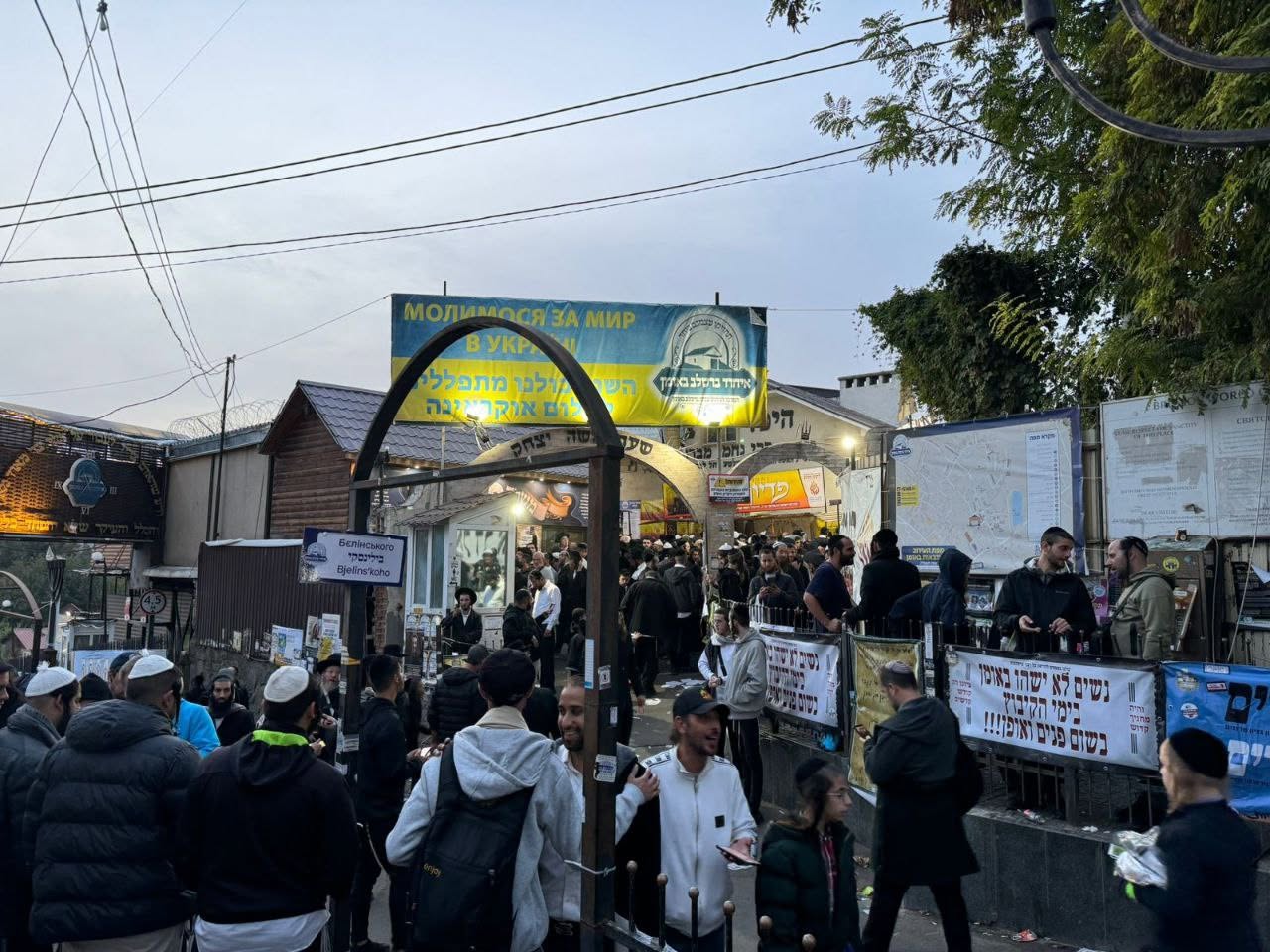
The Cabinet of Ministers of Ukraine has decided to change the status of the local landmark “The Grave of Tzadik Nachman,” located at 1 Hryhorii Kosynka Street in Uman. The status has been changed to a national-level historical monument, according to a Telegram post by Taras Melnychuk, the Cabinet’s representative in the Verkhovna Rada.
Tzadik Nachman of Bratslav (Breslav) was the great-grandson of the founder of Hasidism, Baal Shem Tov, and the founder of the Bratslav dynasty. He lived in Uman, where he was buried in 1810 in the old Jewish cemetery. Since then, this grave has become the most important shrine for followers of the Bratslav branch of Hasidic Judaism.
Every year during the Jewish New Year—Rosh Hashanah—tens of thousands of pilgrims from around the world come to Uman to pray at the shrine and receive a blessing. According to Hasidic tradition, celebrating the New Year at the grave of Tzadik Nachman promises a “happy year.”
In 2023, more than 20,000 pilgrims arrived for the holiday, even though officials had officially asked people to refrain from traveling. And last year, media reports indicated that at least 30,000 Hasidim arrived in Uman.
The government’s new decision calls for designating the site as a national landmark. This is intended to provide stronger legal protection for the holy site, tighten security measures on the premises, and regulate construction projects within the protected zone.
Uman remains a place of pilgrimage for thousands of Hasidim not only on Rosh Hashanah but also on Rabbi Nachman’s birthday. In 2025, pilgrims from Israel, the United States, and Europe traveled to the city to celebrate the 253rd anniversary of the birth of the founder of Bratslav Hasidism. This is the second most important Hasidic holiday, celebrated at the grave of Tzadik Nachman. They believe that being present on this day brings blessings and spiritual renewal.